 Schedule an Appointment
5 Costly Tree Removal Mistakes Every Homeowner Must Avoid
Expert insights for property owners
5 Tree Removal Mistakes That Cost Homeowners Thousands
Attempting DIY Removal Without Professional Assessment
Many property owners underestimate the complexity of removing trees from their yards, believing they can handle the job themselves with rented equipment and a free weekend. This assumption proves costly when homeowners discover too late that removing a tree involves understanding weight distribution, fall patterns, proximity to structures, and potential hazards that only trained professionals can accurately assess. In southeastern Wisconsin, where mature oak, maple, and ash trees dominate residential landscapes, attempting removal without proper evaluation leads to damaged roofs, crushed fences, and injured family members. The weight of a single large branch can exceed several hundred pounds, and miscalculating its trajectory during cutting can send it crashing through windows or onto vehicles parked nearby. Professional arborists evaluate multiple factors before beginning any removal project. They examine the tree’s lean, check for internal decay that weakens structural integrity, identify overhead power lines, and assess ground conditions that affect equipment placement. These assessments require years of experience and specialized knowledge that weekend warriors simply do not possess. The financial consequences of skipping professional evaluation extend beyond immediate property damage. Homeowners who cause utility line damage face repair bills that easily reach five figures, plus potential fines from utility companies. Insurance policies often exclude coverage for damage caused by DIY projects, leaving property owners personally liable for all costs associated with their mistakes. Renting equipment without understanding how to operate it safely compounds the problem. Chainsaws, wood chippers, and stump grinders cause serious injuries when handled improperly. Emergency room visits, lost wages during recovery, and long-term disability costs far exceed the money saved by avoiding professional services.
Ignoring Underground Utilities and Root Systems
Underground infrastructure presents invisible dangers that homeowners frequently overlook when planning tree work. Root systems extend far beyond the visible canopy, often intertwining with water lines, sewer pipes, electrical conduits, and gas mains buried beneath lawns and driveways. Disturbing these systems during removal creates expensive emergencies that disrupt entire neighborhoods. Wisconsin law requires property owners to contact Diggers Hotline before any excavation work, including stump grinding and root removal. This free service marks underground utility locations, preventing accidental strikes that cause service interruptions, explosions, or electrocutions. Despite this legal requirement, many homeowners skip this critical step, assuming their property lacks buried infrastructure or believing that surface indicators reveal everything below ground. Tree roots often wrap around underground pipes, and removing the tree without addressing this entanglement damages water and sewer lines. Repair costs for broken sewer laterals range from three thousand to ten thousand dollars, depending on depth and accessibility. When roots have penetrated clay or cast iron pipes, property owners face complete line replacement rather than simple repairs. Stump grinding equipment can strike buried utilities even after calling for locates, particularly when utility companies mark locations inaccurately or when homeowners misjudge the grinding depth needed. Natural gas line strikes create immediate life-threatening situations requiring emergency response and neighborhood evacuations. The resulting repair bills, fines, and liability claims transform a simple stump removal into a financial catastrophe. Foundation damage represents another consequence of improper root system handling. Large tree roots that previously stabilized soil can leave voids when removed carelessly. These voids allow soil settlement that cracks foundation walls and basement floors, requiring structural repairs that cost tens of thousands of dollars and decrease property values substantially.
Hiring Uninsured or Unlicensed Contractors
Budget-conscious homeowners often select the lowest bid without verifying contractor credentials, insurance coverage, or licensing status. This decision backfires when uninsured workers suffer injuries on the property, when substandard work damages homes, or when fly-by-night operators disappear after receiving deposits without completing promised services. Wisconsin requires commercial applicators who apply pesticides or treat diseased trees to hold proper certification. Contractors performing this work without credentials expose homeowners to liability and fail to provide treatments that actually address tree health problems. Money spent on unlicensed treatments becomes wasted investment when trees continue declining or when improper chemical applications harm surrounding landscapes. Insurance coverage protects property owners from liability when workers suffer injuries during tree work. Uninsured contractors who fall from trees, suffer chainsaw injuries, or experience other accidents can sue homeowners for medical expenses, lost wages, and pain and suffering. These lawsuits result in judgments that exceed hundreds of thousands of dollars, potentially forcing property owners into bankruptcy or requiring them to sell their homes to satisfy court-ordered payments. General liability insurance protects against property damage caused during work. When uninsured contractors drop branches on houses, vehicles, or neighboring properties, homeowners bear financial responsibility for all repairs. Their personal insurance may deny claims when damage results from hiring uninsured contractors, leaving them personally liable for costs that responsible contractors’ insurance would have covered. Verifying credentials requires minimal effort but provides maximum protection. Requesting certificates of insurance, checking license status with state agencies, and contacting references from previous customers takes less than an hour. This small time investment prevents financial disasters that haunt property owners for years after choosing the wrong contractor based solely on price. Reputable companies willingly provide proof of insurance and welcome questions about their qualifications. Contractors who hesitate, make excuses, or pressure homeowners to skip verification steps reveal themselves as unqualified operators who pose serious risks to property and personal finances.
Removing Trees During Unsuitable Weather Conditions
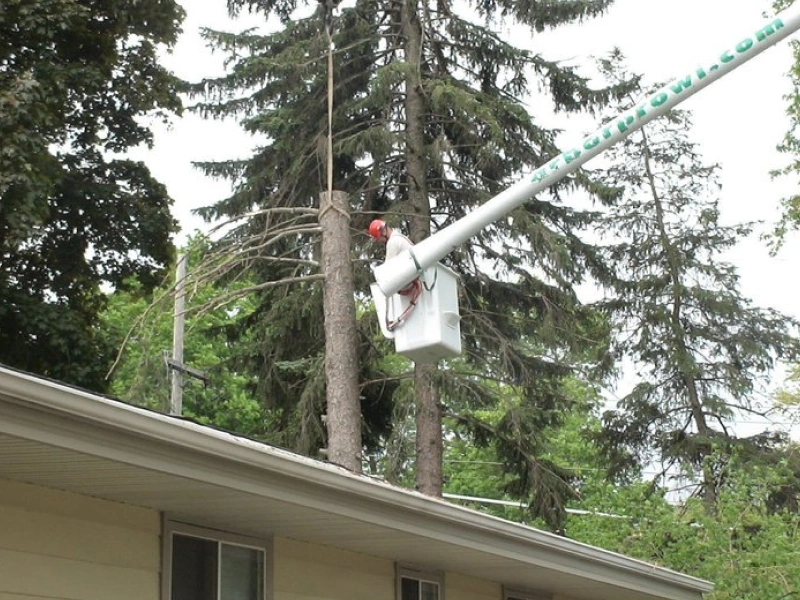
Weather conditions dramatically affect the safety and success of tree work, yet impatient homeowners often pressure contractors to proceed during inappropriate conditions or attempt DIY projects without considering environmental factors. Wind, rain, frozen ground, and ice-covered branches transform routine removals into dangerous operations that produce tragic outcomes. Wind speeds exceeding fifteen miles per hour make cutting large trees extremely hazardous. Gusts alter falling patterns unpredictably, sending sections in unintended directions that strike workers, bystanders, or structures. Wisconsin’s variable spring and fall weather creates sudden wind shifts that catch even experienced climbers off guard, but these conditions prove especially dangerous for inexperienced homeowners who lack training in recognizing when conditions become unsafe. Frozen ground prevents proper equipment positioning and makes establishing stable work zones difficult. Crane operators cannot level outriggers on ice-covered surfaces, creating tipping hazards that endanger everyone nearby. Frozen soil also prevents proper anchoring of rigging equipment used to control large sections during removal, increasing the likelihood of uncontrolled falls that cause property damage. Wet conditions create slippery bark that makes climbing dangerous and reduces chainsaw operator control. Rain-soaked wood weighs significantly more than dry timber, altering the weight calculations that determine safe cutting sequences. These factors combine to increase accident rates dramatically during and immediately after precipitation events. Ice storms create particular challenges in southeastern Wisconsin, where homeowners face pressure to remove damaged trees quickly before they fall on structures. However, branches coated in ice become extremely slippery and unpredictable. Ice loading also changes branch weight distribution in ways that make cutting patterns unreliable, even for experienced professionals who understand tree physics under normal conditions. Patient homeowners who wait for appropriate weather conditions protect themselves, their properties, and the workers performing the removal. Professional services understand these timing considerations and refuse to work during dangerous conditions, even when customers express urgency. This commitment to safety prevents accidents that turn tree work into tragedies.
Neglecting Proper Cleanup and Stump Management
Tree work does not end when the trunk hits the ground. Incomplete cleanup and improper stump handling create ongoing problems that diminish property values, attract pests, and limit future landscape use. Homeowners who accept incomplete work from discount contractors or abandon DIY projects midway through discover that saving money on cleanup costs far more in the long run. Leaving stumps in place invites wood-boring insects, fungal diseases, and decay organisms that spread to healthy trees nearby. Carpenter ants, termites, and powder post beetles colonize decaying stumps, establishing populations that eventually migrate to wooden structures on the property. The cost of treating widespread insect infestations and repairing damaged wood in homes exceeds stump grinding expenses by factors of ten or more. Stumps left at ground level create lawn maintenance hazards that damage mowing equipment and injure people walking across yards. Hidden stumps covered by grass growth cause twisted ankles, and mower blades striking stumps launch debris that breaks windows or injures bystanders. Property owners also face liability when visitors suffer injuries from stumps they failed to remove or mark clearly. Shooting stumps rather than grinding them properly leaves extensive root systems that continue affecting soil and underground infrastructure. Tree roots can take decades to decay completely, maintaining their grip on buried pipes and creating obstacles for future construction projects. Homeowners who want to build additions, install pools, or plant replacement landscaping face expensive excavation work to remove roots that proper grinding would have eliminated. Wood debris left scattered across properties attracts rodents seeking nesting materials and shelter. Piles of branches and sawdust provide ideal habitat for mice, rats, and other pests that eventually move into basements and attics. Professional cleanup removes these attractants, preventing pest problems before they develop. Arbor Pro, LLC understands that quality tree work includes thorough cleanup and complete stump grinding that leaves properties ready for immediate use. Our certified arborists assess each situation individually, recommending appropriate stump management strategies based on future landscape plans, budget considerations, and site-specific factors. We handle projects from initial assessment through final cleanup, ensuring customers receive complete service that protects their property investments. With proper insurance coverage, certified expertise, and commitment to safety, we help property owners avoid the costly mistakes that turn tree work into financial burdens. Our knowledge of local soil conditions, seasonal weather patterns, and Wisconsin tree species enables us to complete projects efficiently while maintaining the highest safety standards and delivering results that enhance property values rather than diminishing them.